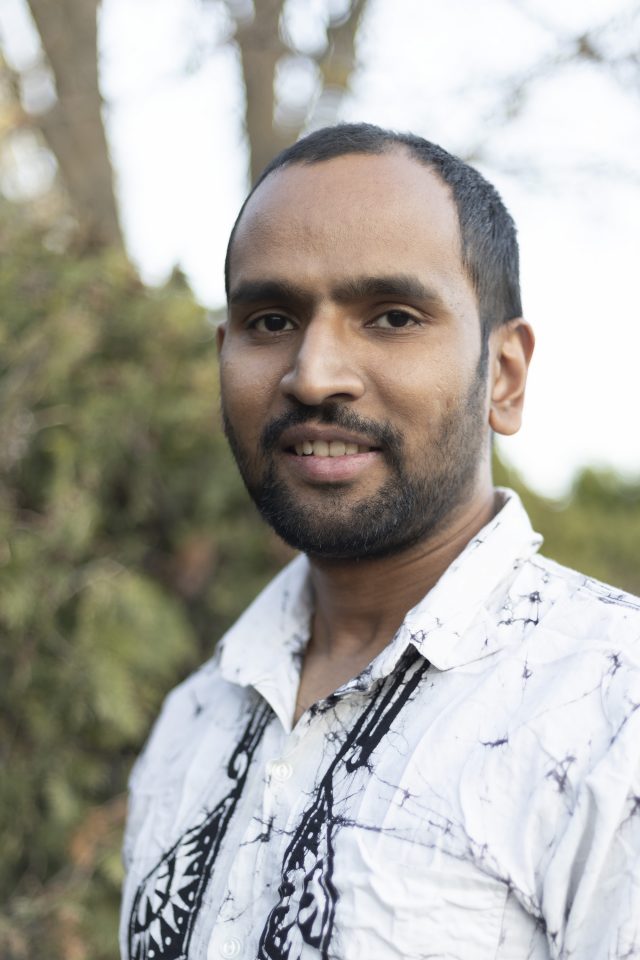
Rashiga graduated from the University of Moratuwa, Sri Lanka with a bachelor’s degree in mechanical engineering in 2014. While doing his bachelor’s he has represented his alma mater locally and internationally. In the year 2013, he was part of a team of two, who won first place in “CADEAGER 2013” CAD modeling competition which was organized by “The institution of Engineers Sri Lanka”. In the year 2014, he was part of a team of four that won the “CATIA excellence award in the micro-mobility electrical vehicle design competition” which was organized by the Association for the Promotion of Electric Vehicles, Japan. The award ceremony was held at the Tokyo Motor show 2014. This achievement was recognized by the annual University award ceremony held by the University of Moratuwa.
After graduating he worked as a design engineer at VEGA Innovations(https://vega.lk/) for three years. At VEGA he was one of the initial members who got involved in the majority of the design and manufacturing of the prototype electric sports car in Sri Lanka. The prototype was unveiled at the Geneva motor show 2020.
Afterward, he completed his Master of Engineering in mechanical engineering at Korea University of Science and Technology (KOREATECH) in Cheonan, South Korea (2017-2019). During his master’s degree, he was involved in the shape optimization of an air compressor shaft assembly in a commercial fuel cell electric vehicle.
Throughout his career, he has worked towards developing skills and interests in finite element modeling, manufacturing, and sustainable transportation. He is currently a PhD research student in the HPPM lab at UBCO under the guidance of Dr. Dimitry Sediako. In his leisure time, Rashiga loves camping, 3d modeling/visualization, and Photography